
Dog in the Machine
Dog in the Machine is a tactical roguelite where you help an AutoDog escape a dystopian mecha-city and reunite with its exiled humans. Battle through a series of encounters on compact grids filled with reactive elements, enemy guardians, and environmental hazards. Preview your actions, experiment with different strategies, and trigger the most satisfying chain reactions.
Music and sound design
I composed the original score for Dog in the Machine and created all of the game's sound design, from sound effects to interface sounds.
In a strategy game, you spend a lot of time watching and thinking before you act. The music had to stay alive through those moments without becoming repetitive. So I built a fairly restless musical system that triggers many elements depending on what is happening in the game.
FROM SCORE
TO GAME.
-
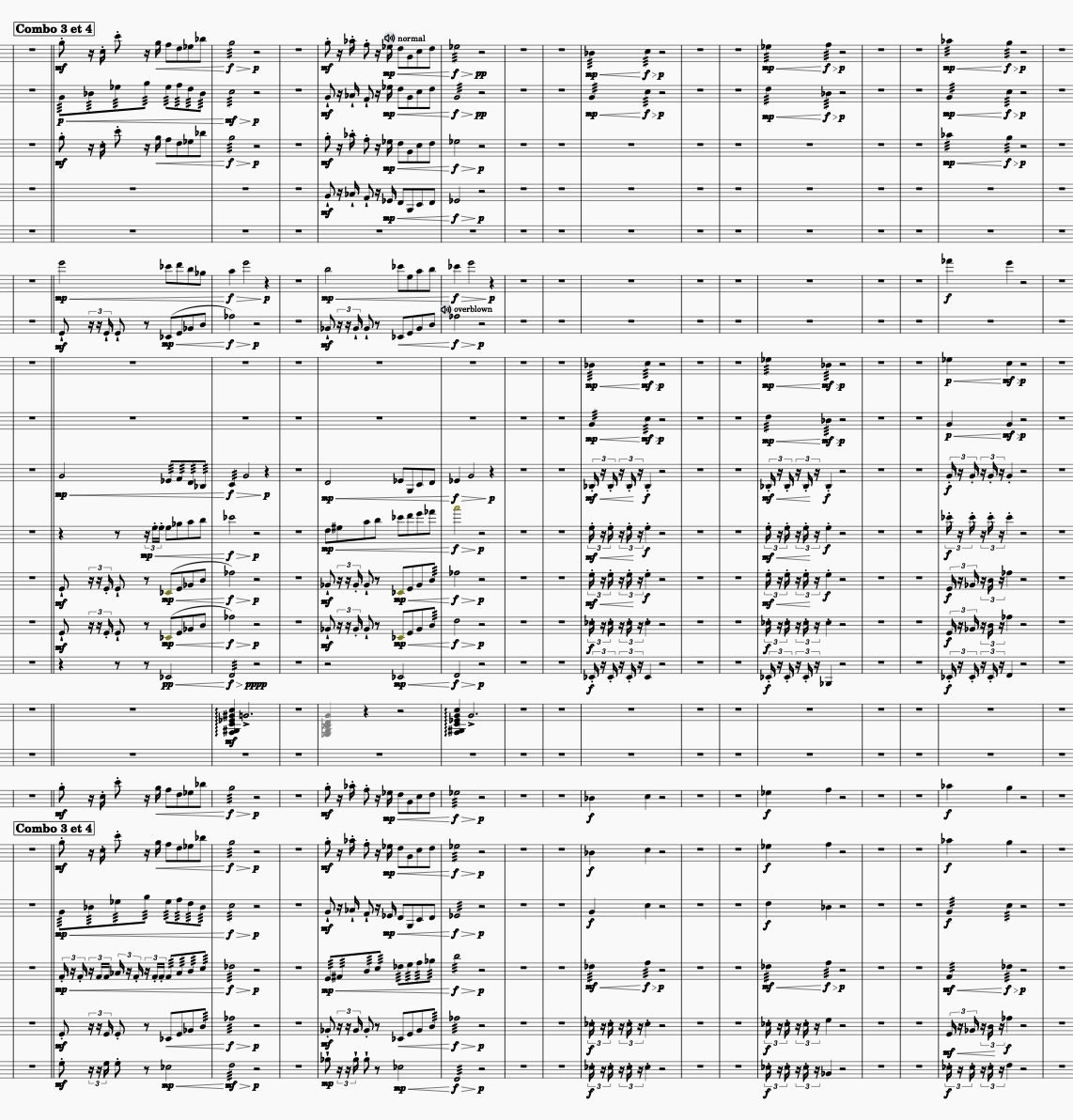
01Orchestral scoreMuseScore
-
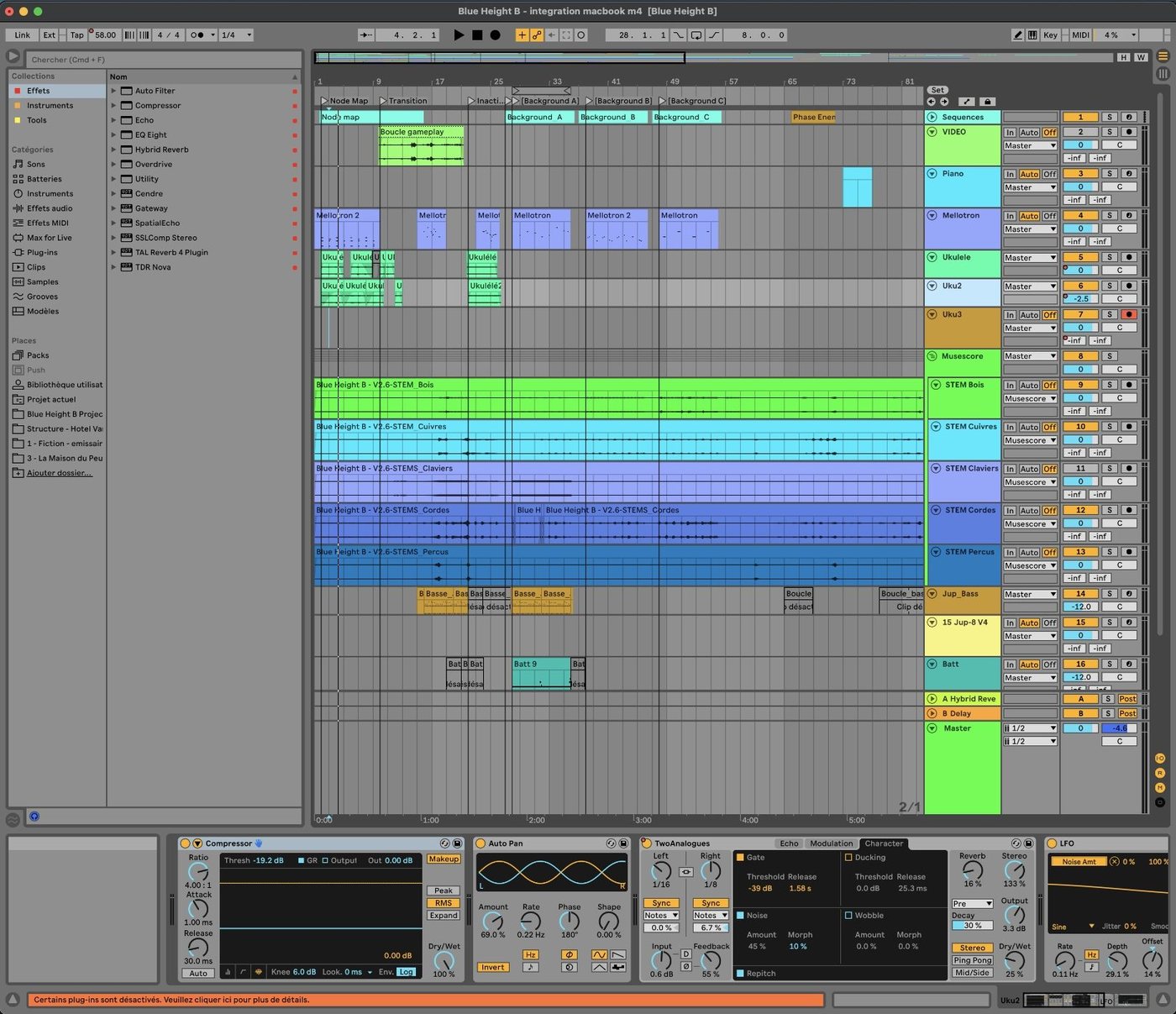
02Instruments & synthsAbleton Live
-
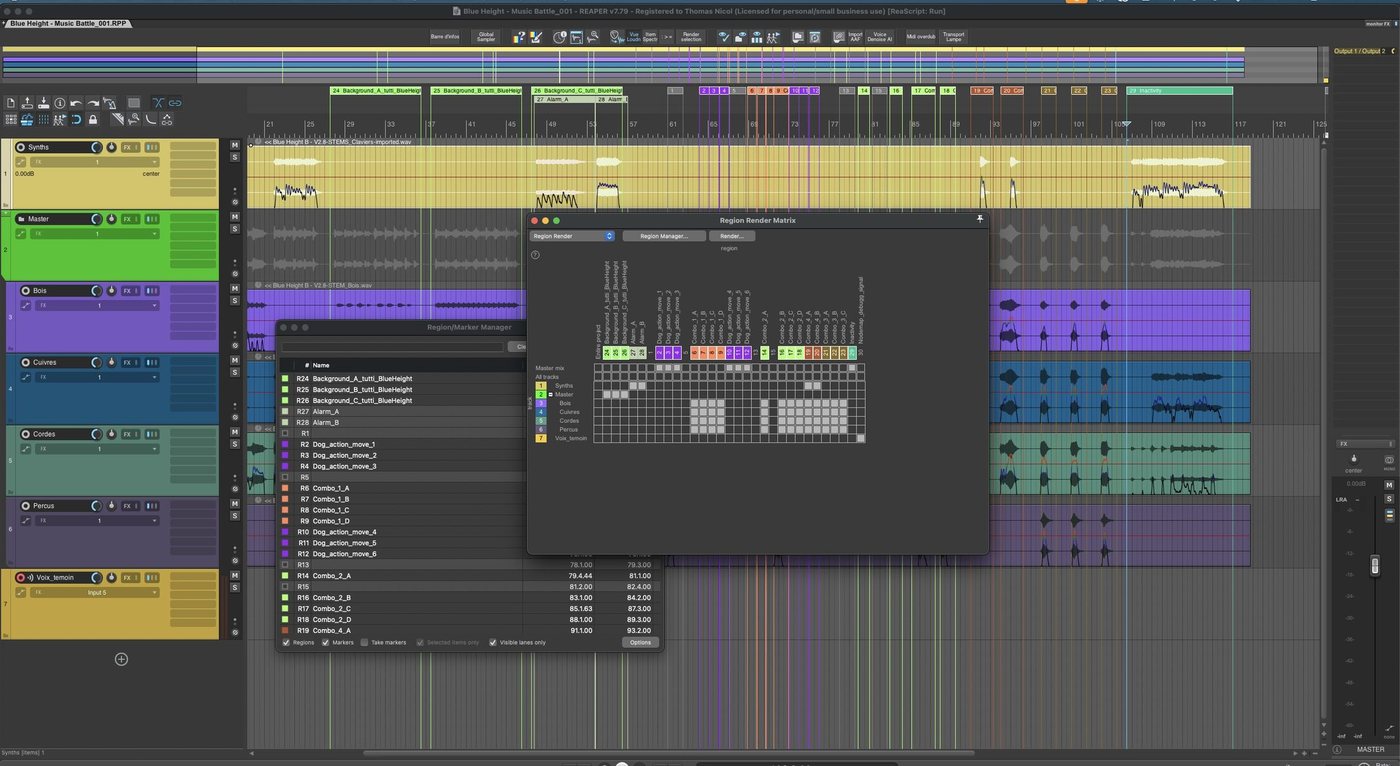
03Audio assetsReaper
-
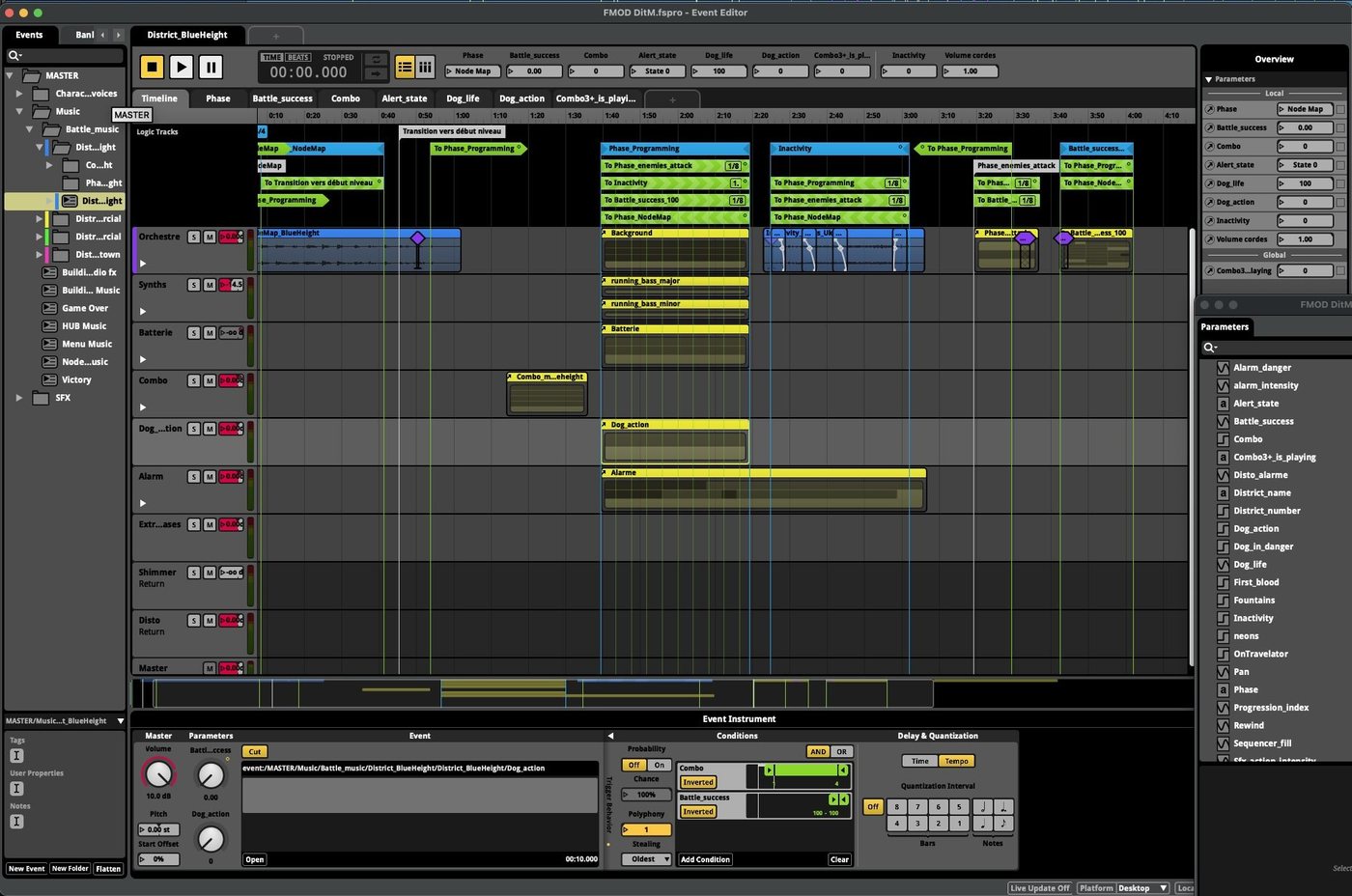
04Interactive systemFMOD Studio★ CORE SYSTEM
-
05Game integrationUnity
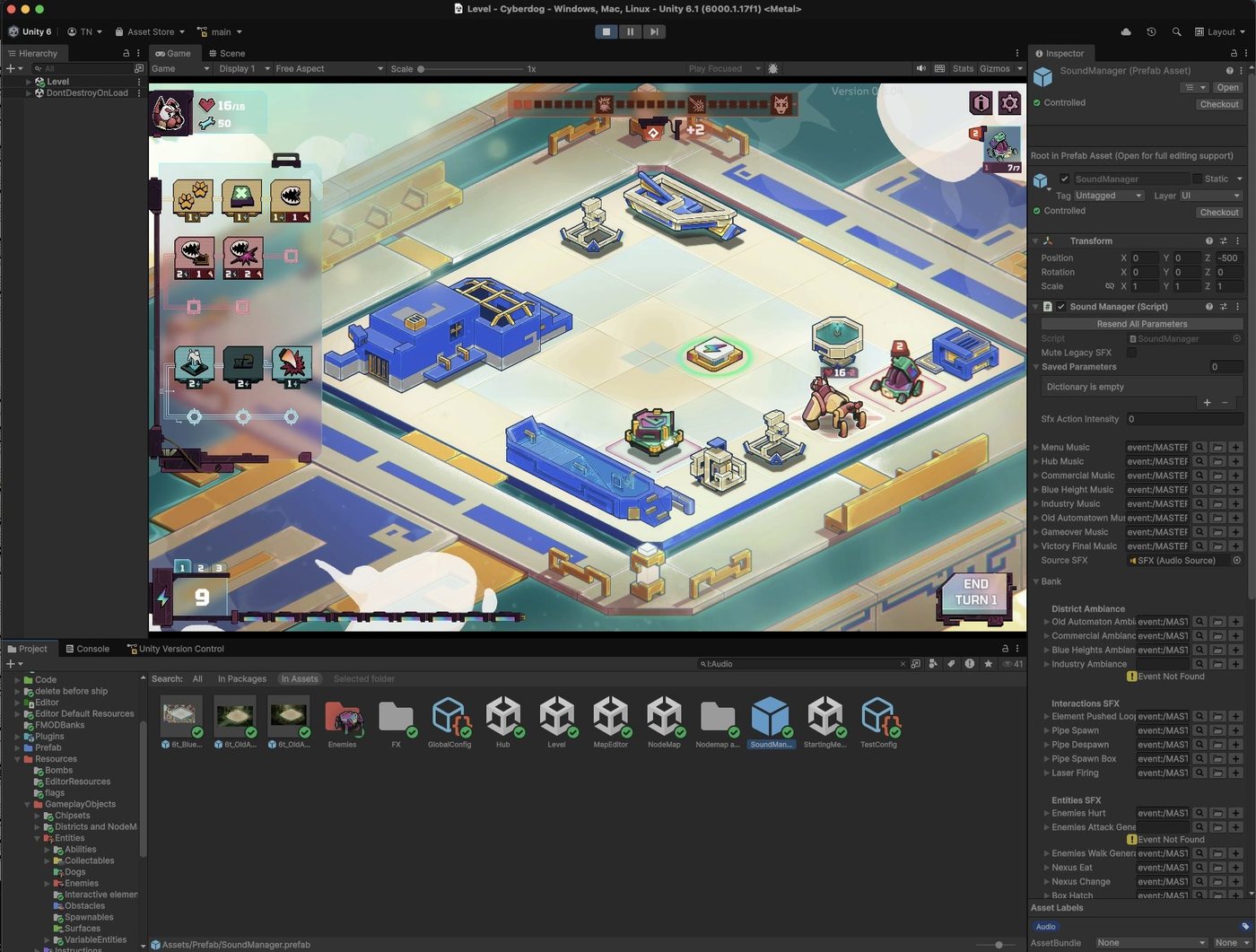
The music of Dog in the Machine was built through many stages, in dialogue with the rest of the team, notably the Game Designer and the Game Director, but also the game's visual artists, to keep everything artistically coherent.
I first wrote the themes, the combos and all the orchestral parts in a linear way, like puzzle pieces, with the future assembly in mind. Their rendering then went into my favourite DAW, where I added the synthesizers, the sound effects and recorded instruments: ukulele, bass, glass harmonica, drums…
I then used Reaper, connected to FMOD, to render all the music's audio assets, relying on its powerful render matrix, which lets you choose precisely which tracks to combine or not. Reaper then renders every file and adds it automatically to the FMOD assets.
Next came designing the music's behaviour in FMOD. We thought a lot about what that behaviour should mean, so that the music helps the player understand the gameplay mechanics. It had to react to the player's actions, progress, successes and dangers, for a restless feel, even in a tactics game.
Finally, in Unity, each FMOD event was tied to the game element that triggers it through scripts and parameters designed and coded by the Game Director and Lead Programmer.
In the end, I designed the music to hold together on several levels:
- Aesthetics: what world we are in, what dramatic tension, what mood players should be in.
- Gameplay: the music is part of the game, built into the game engine, so it reacts to every component of the gameplay.
- Reward: the music also rewards players as they progress. It was designed to build in intensity as the game goes on, to encourage players and give them a sense of power when they chain the right actions together.
And since video game music is best enjoyed in its interactive setting, I coded an original player that graphically reflects the game's various gameplay components. You can try it for free here; a full version will be offered with the game on its Steam page in the future.
Play with the game's music
The music of the first level, INDUSTRIAL, running on the game's interactive system. Switch phases, trigger combos, raise the alert: the music responds as it does in play.

48 MB download